
Building sustainable rural health through connected care
One in five Americans lives in a rural community, and in many of those communities, the local hospital is more than a place to receive care. It is a top employer, a tax base, and a key reason families are willing to put down roots. When a rural hospital loses a service line or closes, the ripple effects extend far beyond patient access. Jobs disappear, schools strain, and the local economy feels the impact.
The current wave of state and federal investment in rural transformation has the potential to change that trajectory – but only if the programs we build are designed to outlive the funding cycles that launched them.
Where digital health can do the most good
As a CNO, I think a lot about where technology earns its place at the bedside. In rural settings, the answer is increasingly clear. Connected care — virtual workflows woven into the daily rhythm of inpatient, emergency, and ambulatory care — is one of the most practical ways to address the access, workforce, and capacity pressures rural organizations face right now.
Four use cases stand out as being especially well-suited to digital rural transformation:
- Keeping care local. Tele-specialty consults, virtual behavioral health, maternal care support, and remote second opinions allow rural facilities to retain patients who would otherwise be transferred or simply go without. Every avoided transfer is revenue preserved locally and a family that stays close to home.
- Offsetting workforce strain. More than half of the rural nursing workforce is approaching retirement age, and contract labor costs continue to squeeze margins. Virtual nursing models offload admissions, discharges, documentation, and dual-RN safety checks to experienced nurses working remotely, extending the careers of seasoned clinicians and giving bedside teams meaningful support during the shift.
- Managing capacity and throughput. Tele-ICU and tele-ED coverage let small rural facilities care for higher-acuity patients overnight and on weekends without standing up a full specialist roster. Virtual observation reduces sitter spend and prevents falls and elopement events that drive avoidable length of stay.
- Building resilient infrastructure. Flexible virtual care platforms have proven their value during everything from staffing shortages to severe weather events to the pandemic years. Investing in connected care infrastructure now means rural communities are better positioned to maintain continuity of care when the unexpected happens.
The evidence is mounting
Rural health systems are already showing what is possible when connected care is implemented thoughtfully.
Starr Regional Medical Center, a community hospital serving rural Tennessee, launched a 24/7 tele-ICU program across its campuses to give bedside teams continuous access to board-certified intensivists. The program enables twice-daily virtual rounds and on-demand critical care consults, allowing the hospital to keep higher-acuity patients local rather than transferring them to tertiary centers hours away. The goal was simple: to deliver specialized care close to home.
At Rome Health in upstate New York, a virtual nursing program is reshaping the way the inpatient team handles admissions, discharges, and patient education. Early outcomes have included reduced documentation burden for bedside RNs, more consistent patient teaching at discharge, and measurable improvements in nurse satisfaction, all in a market where every retained nurse matters.
Stories like these are emerging across the country, and they share a common thread. The strongest programs are not technology projects layered on top of existing operations. They are clinical operating models designed by nursing and medical leadership in which virtual workflows are deeply integrated with bedside care.
Designing for sustainability from day one
The hardest conversation in rural health care right now is about what happens after RHTP. Federal and state dollars can stand up new programs, but they cannot indefinitely fund them. Programs that depend on grant cycles alone will not survive.
In my experience, sustainable rural programs share a few characteristics. They are designed around the specific needs of the communities they serve, not imported wholesale from urban academic medical centers. They use shared infrastructure (hub-and-spoke models, cooperative networks, regional clinical hubs, etc.) to spread fixed costs across multiple facilities. They are tightly tied to reimbursable services and value-based care performance, so the operating model has a path to self-funding. And they are designed to scale modularly, so the program can start small, prove value, and expand without a forklift replacement.
Measure what matters
Sustainability also requires evidence. State agencies, federal funders, and hospital boards will all want to see that RHTP investments are delivering measurable returns. From the start, programs should commit to a set of meaningful KPIs and the analytics infrastructure to track them. Useful metrics include:
- Avoided transfers and patient days kept local
- Sitter hours reduced through virtual observation
- Reduced nurse turnover and contract labor spend
- Length-of-stay improvements tied to virtual nursing workflows
- Improved tele-consult volumes and time-to-specialist access
- Enhanced patient and family experience scores
These numbers demonstrate impact to a state oversight committee, support quarterly reporting requirements, and perhaps most importantly make the internal case for sustaining the program when grant funds wind down.
A hopeful inflection point
It is easy to focus on the pressures facing rural health care. The financial headwinds are real, the workforce gap is widening, and the service-line attrition is genuinely alarming. But the moment we are in is also one of unusual possibilities.
Digital health has matured. AI-assisted monitoring, interoperable platforms, and virtual workforce models have moved out of the pilot phase and into the operating model. State and federal investment in rural transformation is at a generational high. Clinicians, administrators, and policymakers are speaking the same language about access, equity, and sustainability.
The communities that need innovation most have the most to gain from it. Rural transformation is not about catching up with urban care. It is about designing the next frontier of care delivery in rural places where the pain has been the greatest and the need for creativity is the most essential. If we use this moment well, the safety net we are building today becomes the foundation that rural America stands on for decades to come.
NRHA adapted the above piece from CareGility, a trusted NRHA partner, for publication within the Association’s Rural Health Voices blog.
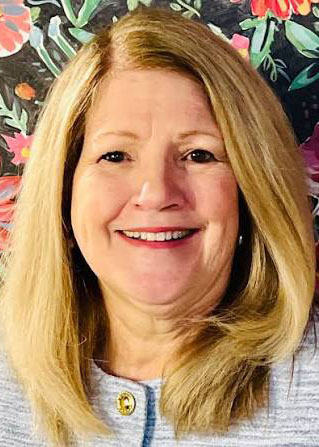 | Susan Kristiniak, DHA, is chief nursing officer at Caregility, where she leads clinical design for connected care programs across hundreds of hospitals nationwide. A longtime nursing executive, Susan focuses on the practical realities of integrating virtual care into bedside workflows, with particular attention to workforce education and sustainability, and care models that serve rural and underserved communities.. |