
Reflections from NRHA’s ASA On Aging 2026 presentation
The American Society on Aging (ASA) 2026 Conference is one of the nation’s premier convenings dedicated to advancing innovative solutions to improve the lives of older adults. Bringing together leaders from aging services, health care, public health, academia, policy, philanthropy, community organizations, and more, the conference created an important platform for shaping the future of healthy aging and equitable care nationally.
The National Rural Age-Friendly Initiative
As part of this national conversation, NRHA – through the National Rural Age-Friendly Initiative supported by The John A. Hartford Foundation – led a session on rural health equity and age-friendly transformation. The presentation focused on advancing age-friendly communities through collaboration and belonging, aligning with the conference theme and emphasizing the need to center rural communities in conversations about healthy aging and equitable care delivery. The session highlighted the urgent need to address structural inequities affecting rural older adults while showcasing the innovation, resilience, and leadership emerging nationwide.
The NRHA rural aging session featured Dr. Carrie Henning-Smith, associate professor and co-director of the University of Minnesota Rural Health Research Center; Rebecca Yeboah, program services coordinator at NRHA and coordinator of NRHA’s National Rural Age-Friendly Initiative; and Janel Lowman, senior manager of community outreach at the Mitchell Cancer Institute at the University of South Alabama.
Learning objectives
- Examine rurality as a critical dimension of equity in aging, including the structural barriers and systemic challenges that uniquely affect older adults in rural communities while also identifying the strengths of rural communities.
- Describe NRHA’s National Rural Age-Friendly Initiative’s collaborative framework, including how partnerships across age-friendly ecosystem sectors and initiatives support age-friendly transformation in rural settings.
- Identify actionable strategies and real-world examples of workforce-driven approaches, including the role of community health workers, that promote belonging, advance rural health equity, strengthen rural health systems, and improve outcomes for rural older adults.
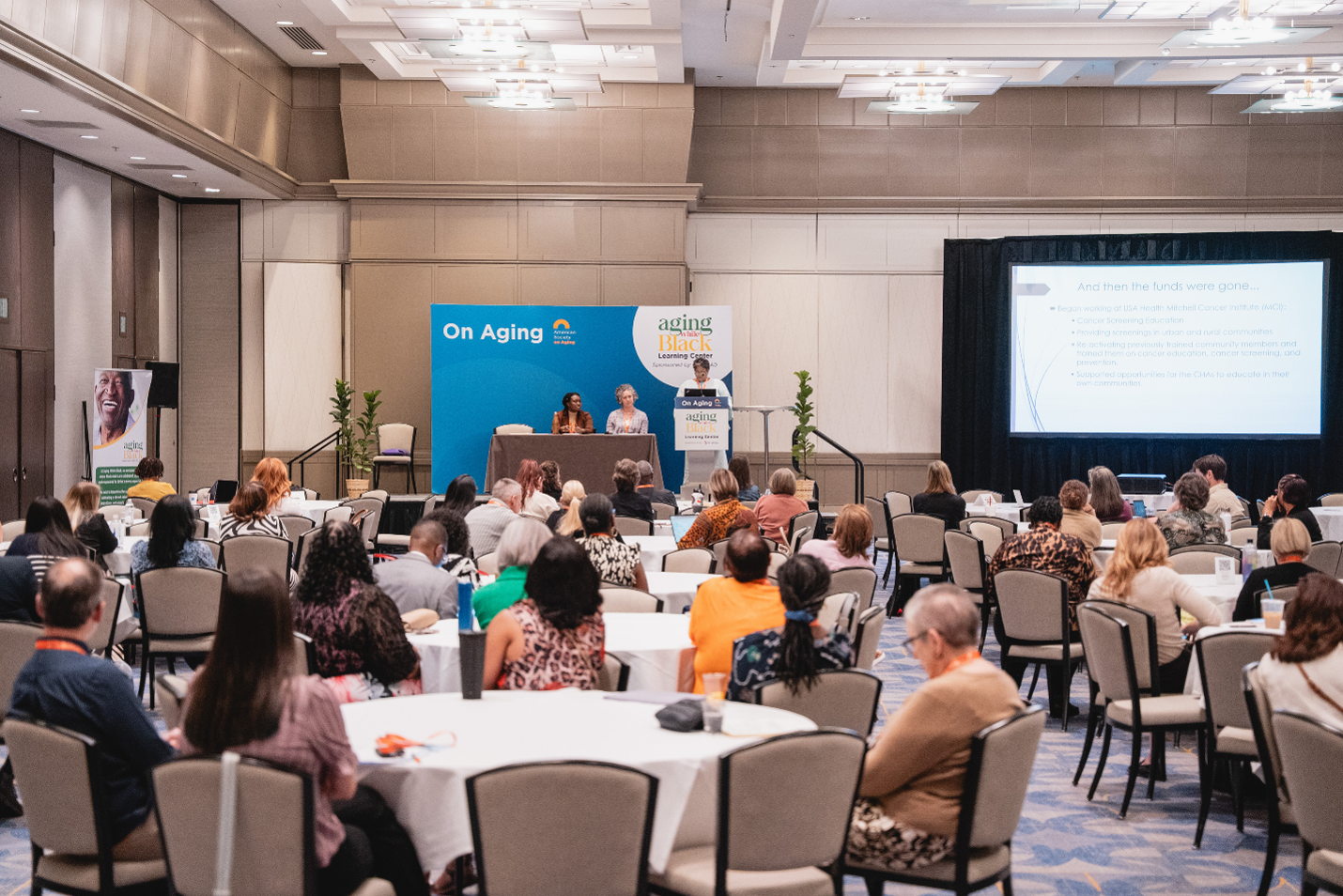
Understanding rural aging and health equity: Dr. Carrie Henning-Smith
During the presentation, Henning-Smith, NRHA’s current president, provided a research- and policy-informed overview of rural aging, health equity, and structural challenges and opportunities. She emphasized that rural areas are leading the way in aging, creating a disparity in infrastructure, environment, socio-demographics, and access to health care and long-term services and supports.
Despite these disparities, Henning -Smith emphasized the strength, resilience, creativity, and leadership that rural communities and older adults possess. According to Henning-Smith, rural areas provide energy, food, natural resources, beauty, and recreation – and they are already leading innovative and collaborative solutions to complex aging challenges and should be supported.
Key messaging: Rural older adults are not a monolithic population. Experiences differ significantly across states, regions, cultures, demographic groups, and access to resources, making it essential to apply a strong equity lens to both rural-urban disparities and disparities that exist within rural communities themselves.
Cross-sector collaboration as a rural strength: Rebecca Yeboah
Yeboah shared how NRHA’s NRAFI is leading cross-sector collaboration and drawing attention to rural strengths, with a particular focus on collaboration through partnerships.
NRAFI's seven main partners include the Institute for Healthcare Improvement (IHI), the University of Texas at Arlington, Advancing States, Stratis Health, Oregon Health & Science University, American Heart Association, and Gerontological Society of America (National Center to Reframe Aging). Aside from these partners, new and expanding relations have emerged with organizations including AARP, Trust for America’s Health, American Library Association, American Society on Aging, USAginig, Meals on Wheels America, and Grantmakers in Aging.
These collaborations align with and reinforce the Age-Friendly Ecosystem sectors and initiatives and support implementation strategies, resource sharing, educational programming, technical assistance, and policy development, which strengthen age-friendly systems across rural communities and promote a sense of belonging.
Yeboah highlighted cross-sector partnerships focused on convenings, communication efforts such as policy papers and resource development, educational and technical assistance activities, and integrated community health worker training programs.
Key messaging: Rather than relying on siloed approaches, rural communities/organizations should build partnerships across sectors to improve rural age-friendly care coordination, expand access to services, strengthen workforce development, address social determinants of health, and foster a sense of belonging among rural older adults. Potential partners span a broad range of sectors, including public health, health care, aging services, social services, housing services, libraries, commerce, long-term services and supports, faith-based organizations, economic development, law enforcement and policy makers, parks and recreation, food services, transportation, education and research institutions, philanthropy, private, federal/other governmental agencies, state and local/community organizations, and more.
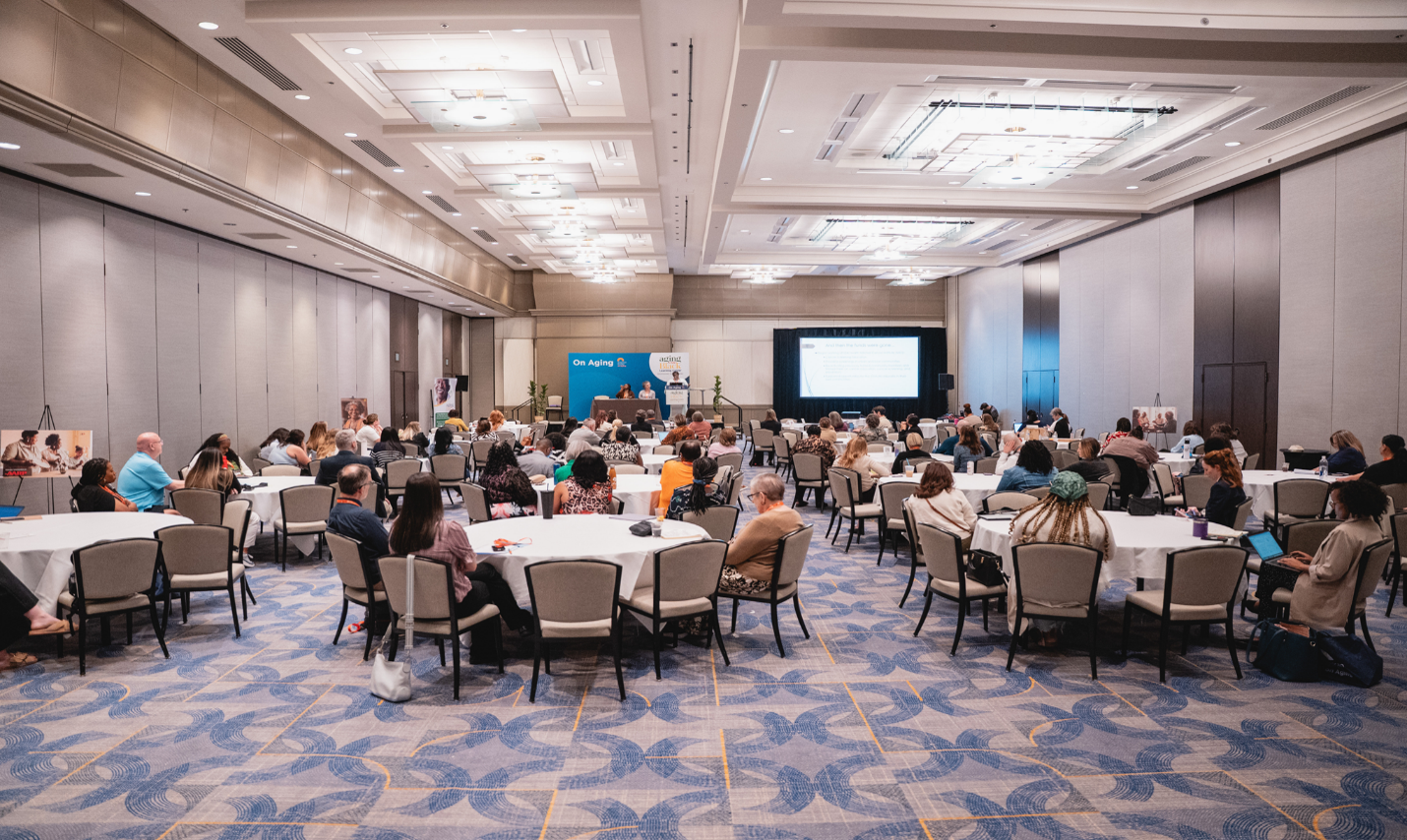
Community health workers 4Ms training and the My Health Checklist: Janel Lowman
Community health workers (CHWs) remain central to NRHA’s efforts to advance rural health equity and age-friendly care. NRHA’s Rural Community Health Worker Training Network was established in 2012 with initial trainings along the U.S.-Mexico border. This training has expanded significantly over the past decade. Through strategic partnerships, the program has addressed a wide range of public health priorities, including Zika response, chronic disease management, rural oral health, cancer survivorship, behavioral health, mental health, and rural age-friendly care. To date, NRHA has trained more than 2,000 CHWs nationwide, including 233 trained specifically on the age-friendly 4Ms Framework. Through NRAFI, NRHA plans to train an additional 30 CHWs across the Black Belt region of Alabama this year. The 30 CHWs will receive the 4Ms and the My Health Checklist training from Lowman.
Lowman was a proud partner of the NRHA National Institute of Health’s All of Us Research Program and has conducted rural CHW trainings in Mobile, Ala., and Baton Rouge, La. She also engaged in NRHA’s Rural CHW oral health training in partnership with CareQuest Institute for Oral Health. Lowman shared applied frontline insights from rural CHW training and implementation tools supporting rural older adults and provided compelling insights from her work across the Gulf Coast. She emphasized the critical role CHWs play as trusted members of their communities who understand local culture, lived realities, and the unique needs of rural older adults. CHWs support older adults through health education, care coordination, advocacy, and navigation while also addressing social isolation and strengthening relationships between individuals and health care systems.
Lowman focused on the implementation of IHI’s My Health Checklist, an Age-Friendly Health Systems resource developed with support from The John A. Hartford Foundation. My Health Checklist helps older adults and their caregivers prepare for care visits while introducing the 4Ms framework — What Matters, Medication, Mentation, and Mobility. The tool helps older adults identify priorities/concerns that are most important to them and prepares them to engage more meaningfully in conversations with their health care providers.
Through the Rural CHWs Community of Practice training program, NRHA partnered with AARP and IHI, recruited CHWs and CHW trainers from rural areas nationwide, and trained them on My Health Checklist. Their goal was simple: explore how the checklist can strengthen conversations with rural older adults and support care that reflects each older adult's priorities. CHWs brought the guide into home visits, community health fairs/outreach, and everyday interactions, using it to facilitate deeper conversations about what matters most to older adults. In many cases, CHWs also introduced the checklist to their own parents and families, reflecting its accessibility and relevance.
This work has produced a series of practical resources, including three listicles and three videos that capture lessons learned and real-world applications of the tool.
- Ideas for sharing My Health Checklist with older adults and those who support them: 01/21/26
- Nine opportunities to advance patient-centered care with My Health Checklist: 02/25/26
- How My Health Checklist changes the conversation for rural community health workers and the older adults in their care: 03/25/26
- One video features rural CHW Royalyn Ramos and Lowman sharing their experience with My Health Checklist. Another video features insights from several individuals who have implemented My Health Checklist.
Key messaging: Having a sense of belonging is fundamental to aging in place. As such, rural older adults should not simply be viewed as recipients of services. Instead they must be engaged as active partners in shaping policies, programs, and community solutions that best serve their interests.
Explore the National Rural Age-Friendly Initiative Resource Hub to learn more about NRHA’s rural age-friendly work.
For more information about the NRAFI, contact Laura Hudson or Rebecca (Becky) Yeboah.
This blog was produced as part of the National Rural Age-Friendly Initiative, a partnership between NRHA and The John A. Hartford Foundation.