
Rural maternal health: practical ways to close the care gap
Rural communities know a hard truth about maternal health: getting care is often much harder than it should be. A prenatal visit may mean a long drive, time away from work, or waiting weeks for an appointment. For people with high-risk pregnancies who need even more than the typical 8 to 14 prenatal care visits, these barriers can be even more significant. They can shape outcomes for both parent and baby.
Improving pregnancy care in rural areas calls for more than good intentions. It takes practical models that bring care closer, connect patients to specialists when needed, and support families before birth and after delivery. In many places, telehealth, remote monitoring, mobile services, and digital education tools are helping do exactly that.
What effective rural maternal health solutions look like
Strong rural maternal health programs tend to share a few key traits. Instead of relying on one building or one specialist, they extend care through partnerships, local touchpoints, and technology.
1. Bring expert care closer to home.
Patients shouldn’t have to travel long distances for every scan, consult, or follow-up appointment. Telehealth and remote collaboration can help specialists support local teams and rural patients in real time.
2. Support care beyond the clinic.
Pregnancy and postpartum needs don’t stop when a visit ends. Remote monitoring, digital education, and coaching can help patients manage conditions between appointments.
3. Address the full continuum including postpartum
Maternal health extends beyond nine months of prenatal care. It also includes the crucial postpartum period, which is the first year after delivery and when more than half of maternal deaths occur.
4. Use measurable results.
Rural leaders need programs that show real impact. Visit volume, screened patients, postpartum engagement, completed scans, and care adherence all matter. These priorities align well with trusted principles: solutions should be practical, transparent, collaborative, and centered on better outcomes for rural communities.
Expanding specialty care in maternity deserts with tele-ultrasound
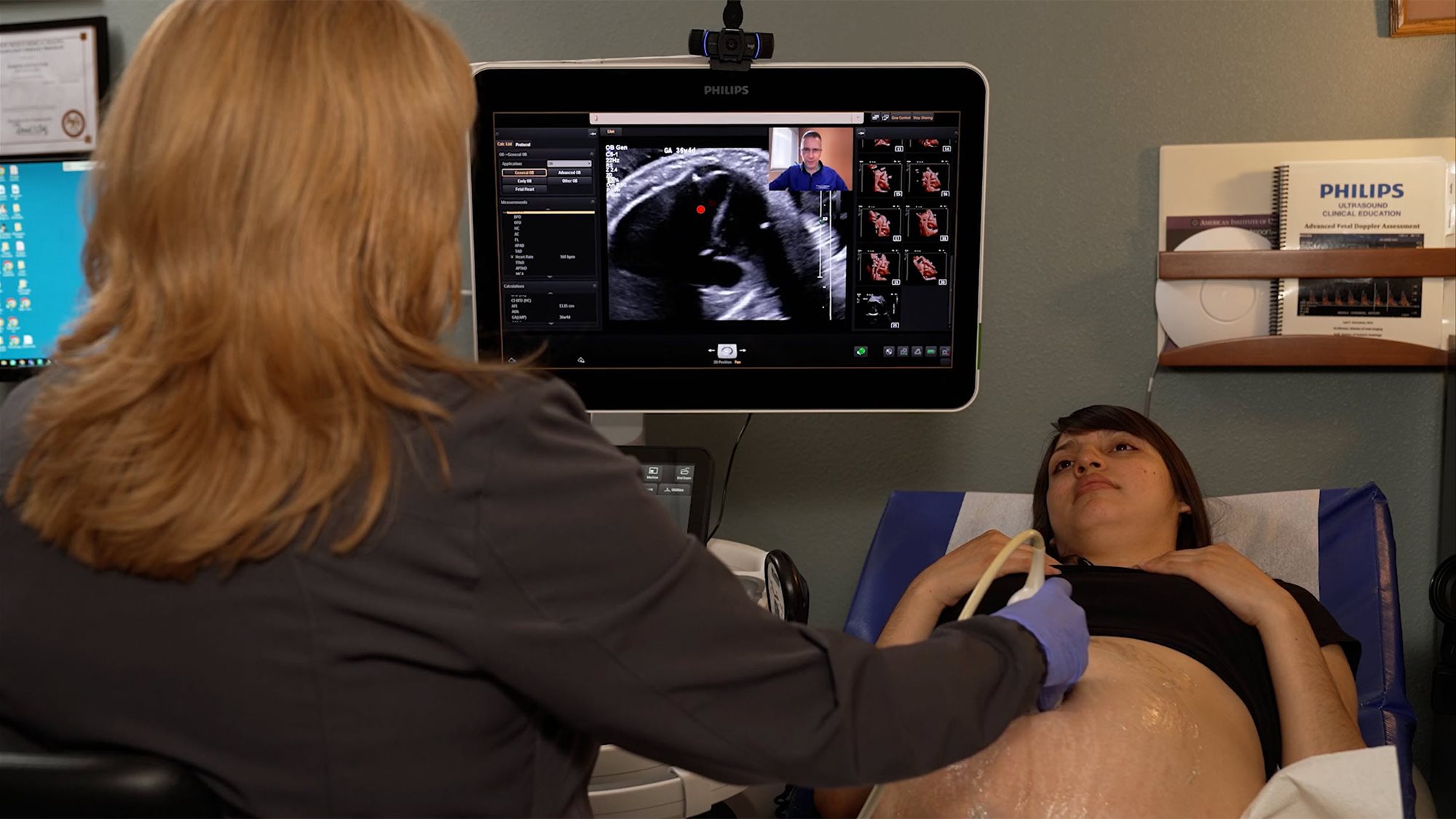
New Mexico Perinatal Associates offers a clear example of how telehealth can strengthen rural pregnancy care. Michael Ruma, MD, and his team use telehealth and ultrasound to reach patients in rural New Mexico, allowing a maternal-fetal medicine specialist in Albuquerque to communicate with a sonographer many hours away and help remotely guide the exam. For rural patients, this model can reduce the need for long-distance travel while giving local teams access to advanced expertise.
The growth of this effort is striking. In 2016, the practice launched telehealth in Farmington, NM with about 70 visits that year. By 2023, that number had grown to 16,523.
The model extends beyond imaging. The practice added mental health treatment as part of perinatal care and conducted 2,500 mental health visits by telemedicine in one year, helping patients manage the stress, anxiety, depression, and social strain that can shape a pregnancy and postpartum recovery.
Reaching communities left behind with mobile maternal care
Sometimes the best way to improve access is to bring care to patients. Mobile health centers in Phoenix, Tucson, and Washington, D.C., serve communities with little or no access to maternity care, providing point-of-care ultrasound technology with telehealth capabilities while local health systems handle clinical staffing and operations. The health centers partner with local organizations such as food banks and community spaces to build trust, increase visibility, and deliver health care services where people already spend their time.
This approach addresses a basic problem: if local prenatal services are limited or far away, many patients face delays in receiving essential screening and support. Portable ultrasound in a mobile unit helps close that gap by making prenatal services easier to reach. It reduces the need for travel to distant clinics or hospitals and creates a more local, community-based entry point into care.
Improving support during pregnancy and postpartum with remote monitoring
Georgia’s remote monitoring initiative shows how connected care can help patients manage higher-risk pregnancies without in-between in-person visits. The program offers access to remote patient monitoring, licensed clinical professionals, and health coaching and support for Medicaid-covered pregnant and postpartum mothers with maternal hypertension and diabetes in more than 70 rural counties.
Licensed nurses, dietitians, and certified diabetes care and education specialists helped participants learn to use the devices and coached them on healthy behaviors. If a patient’s blood pressure or glucose fell outside the target range, clinicians received an alert and reached out to determine whether the patient should see a provider. Monitoring continued for up to 90 days postpartum, and support included mental health screenings and ensuring primary care follow-up.
For rural health care leaders, this model shows that remote monitoring isn’t just about devices. It works because the devices are paired with clinical review, patient education, and a clear protocol for escalations when needed.
Actionable steps for rural health care leaders
To improve rural maternal health, practical tools need to fit local needs. Based on these examples, a few strategies stand out.
Build hybrid care models.
Use in-person visits where they matter most, but expand reach with telehealth, remote consultation, and digital education. This can reduce travel burden without reducing clinical oversight.
Focus on high-risk populations.
Start where earlier intervention can have the clearest impact. Remote monitoring can be especially useful for patients with hypertension, diabetes, or postpartum risk factors.
Partner across the ecosystem.
Rural maternal health works better when providers, payers, public agencies, and community organizations align around the same goals.
Include postpartum care in the design.
There is a significant care gap after childbirth. Any maternal health strategy should include follow-up, monitoring, education, and mental health support after birth.
Measure what matters.
Track visit completion, specialist access, monitoring adherence, postpartum engagement, and referral follow-through. Data helps programs improve and helps communities make the case for sustained investment.
Practical design = better maternal health access
Rural communities deserve care models that work when the nearest specialist is far away, the weather is bad, and the patient has a toddler in the backseat. These examples show how technology can help extend specialist expertise, deliver prenatal services, and monitor high-risk patients in rural and underserved areas.
Different programs, same lesson: when maternal care is built around patient reality, access improves – and when access improves, rural families have a better chance at safer pregnancies, healthier births, and stronger starts.
NRHA adapted the above piece from Philips Healthcare, a trusted NRHA partner, for publication within the Association’s Rural Health Voices blog.
The opinions and clinical experiences presented herein are specific to the featured clinician and are for information purposes only. Individual results may vary depending on a variety of patient-specific attributes and related factors. Nothing in this article is intended to provide specific medical advice or to take the place of written law or regulations.
 | Jennifer Law is the maternal health venture leader at Philips, a global healthcare technology company that aims to improve 2.5 billion lives per year by 2030, including 400 million in underserved communities. In her role, Jennifer focuses on how technology can help close the care gap for millions of pregnant women and families who lack access to quality prenatal and postpartum care in the U.S. and around the world. |