
How one hospital kept advanced imaging close to home
For patients living in rural communities, accessing advanced diagnostic care can sometimes mean more than scheduling an appointment. It can mean arranging transportation, taking additional time away from work, coordinating family responsibilities, and traveling hours to reach a larger health system.
Artesia General Hospital in southeastern New Mexico is working to change that reality.
The 25-bed, nonprofit, community-owned hospital has served the Pecos Valley since 1939. Its patients include older adults, families, educators, and law enforcement professionals, as well as people working in industries central to the region such as oil and gas, agriculture, farming, and ranching.
For some forms of advanced imaging and specialty care, patients have historically faced drives of two to three hours to larger cities. That makes access to advanced diagnostic technology particularly important.
Recognizing a growing need
For years, Artesia General Hospital relied on a 1.5T MRI system that was approaching two decades of service. As the technology aged, the hospital began encountering limitations in image quality, examination capabilities, and scan times. At the same time, physician orders were becoming more complex, and newer MRI applications were beginning to exceed what the existing system could reliably accommodate.
The limitations were particularly challenging for certain patient populations. Patients with some implanted devices could not be accommodated because of technical limitations. Longer scan times also created challenges for larger patients, patients experiencing claustrophobia, and pediatric patients. When an examination could not be performed locally, patients often had to travel two to three hours for imaging, creating a significant burden and representing imaging volume leaving the community.
Hospital leaders saw replacing the MRI not simply as an equipment upgrade, but as an opportunity to expand access and prepare the imaging program for the future.
Building the case for investment
Like many rural health care organizations, Artesia General Hospital had to determine how to make a major capital investment possible.
Funding for the project came primarily through New Mexico state capital outlay funding previously requested by the hospital. The Artesia General Hospital Foundation also provided significant support for portions of the construction associated with the project.
Together, those resources allowed the organization to go beyond replacing the MRI itself.
The hospital expanded the MRI room to roughly twice its previous size and incorporated a caring suite, creating additional accessibility for inpatients, more workspace for technologists, and a more comfortable environment for outpatients.
The hospital also made its case for investment around clinical and community needs rather than the age of the equipment alone. Leaders considered the examinations physicians were requesting, the patients being referred elsewhere, and the opportunity to provide more complex imaging closer to home.
That approach offers an important lesson for other rural hospitals considering major technology investments to evaluate value beyond the initial purchase price. Hospitals should consider which patients currently leave the community for care, which examinations cannot be performed locally, how new technology could improve efficiency, and what additional services could be offered in the future.
Choosing technology with the future in mind
When evaluating a new MRI system, Artesia prioritized image quality, patient accessibility, examination speed, clinical capabilities, technologist workflow, and long-term value.
The hospital ultimately selected Fujifilm’s ECHELON Synergy 1.5T MRI system.
The selection process was not limited to comparing technical specifications. Technologists had opportunities to evaluate the system, visit other facilities, and spend time at Fujifilm’s headquarters before installation. Their feedback helped inform decisions around workflow, room design, workstation functionality, and patient needs.
That staff involvement continued through implementation. MRI technologists and radiology staff worked alongside the hospital’s project manager, facilities team, administration, and foundation. The result was a project shaped in large part by the people who would use the technology every day.
For other rural hospitals evaluating imaging technology, Artesia recommends getting technologists in front of the equipment before making a final decision. Specifications are important, but so is understanding how a system will function in a real clinical environment.
Bringing more imaging closer to home
Since the new system went live, Artesia General Hospital has expanded the range of MRI examinations it can provide locally.
The hospital is now one of the few facilities in southeastern New Mexico offering prostate MRI and has added breast MRI with a new breast coil. The technology also enables the hospital to scan patients with a wider variety of implanted devices when appropriate device conditions are met. Those expanded capabilities are accompanied by increased utilization.
Artesia reports that monthly MRI volume has grown approximately 30 to 35 percent since the new system went live. Shorter examination times have helped create additional scheduling capacity, while expanded clinical capabilities allow the hospital to accept studies that previously may have been referred elsewhere.
For Artesia, return on investment is about more than imaging volume. Keeping an examination local can mean less travel and less time away from work and family for the patient. It can also help physicians receive diagnostic information sooner and reduce disruptions in the continuum of care caused by sending patients to another community for imaging.
“The most important return is access,” the hospital shares. “When patients can stay in their community for advanced imaging, they are more likely to complete the exam in a timely manner, their physicians get the information sooner, and their care continues within their local health care system.”
Rethinking what rural health care can provide
Artesia’s experience also challenges a persistent misconception: that the most advanced health care technology belongs primarily in large metropolitan systems.
“Rural does not have to mean limited,” the hospital shares. “A rural hospital can provide advanced technology, highly skilled staff, and excellent patient care when the organization is willing to invest strategically and build programs around the needs of its community.”
For other rural health care leaders, Artesia’s experience underscores the importance of looking ahead. Rather than evaluating an imaging investment based solely on what a department needs today, hospitals can consider where their physicians, patients, and communities will need them to be five or 10 years from now. Funding opportunities, community partnerships, staff involvement, and a clear understanding of unmet clinical needs can all help make ambitious projects possible.
For Artesia General Hospital, that long-term vision comes back to a simple goal: giving patients throughout southeastern New Mexico greater access to advanced imaging without requiring them to leave their community.
In rural health care, investing in technology is ultimately an investment in access for patients and the community.
NRHA adapted the above piece from Fujifilm Diagnostic Imaging Solutions, a trusted NRHA partner, for publication within the Association’s Rural Health Voices blog.
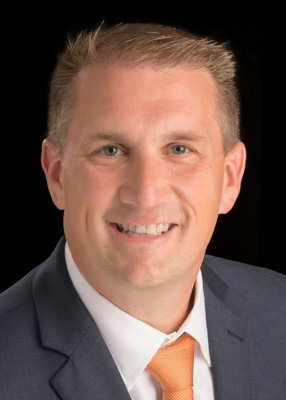 | Monte Hampton, RT, brings more than 28 years of experience in magnetic resonance imaging, with expertise spanning a broad range of systems and technologies. Throughout his career, he has helped technologists across the country deepen their understanding of technology and optimize its use in clinical practice. He currently serves as MR Product Manager for FUJIFILM Healthcare Americas Corporation, supporting Fujifilm’s MR initiatives in the U.S. and around the world. |