
Driving change and improving access to rural MS care
Nearly 30 percent of Wisconsinites live in Multiple Sclerosis (MS) specialty care deserts. With an average driving distance of approximately 205 miles to the nearest specialist, some patients travel four hours or more to receive MS care. MS care deserts in Wisconsin disproportionately affect rural communities where distance to care, health care workforce shortages, and referral barriers can delay diagnosis for months and sometimes, years.
The National MS Society (the Society) has has partnered with the Wisconsin Collaborative for Healthcare Quality (WCHQ) to integrate geographic access data and patient-level trends to improve MS care in rural, medically under-resourced areas. Working together, the Society and WCHQ are mapping diagnostic timelines and identifying desert areas, tracking where delays in diagnosis and treatment occur, and developing targeted training and system-level interventions to address these gaps in care.
This initiative is part of the Society’s broader MS Care Desert initiative, made possible through a historic sponsorship from Genentech. The initiative aims to improve access to care in regions where specialty MS neurological care is limited or non-existent by addressing critical gaps in diagnosis and treatment across the United States. While the initiative also has pilot programs in South Carolina and Mississippi, Wisconsin serves as a vital pilot state for developing data-driven solutions.
The Wisconsin Pilot: A Data-Driven Strategy
The Wisconsin effort is a 12-month collaborative partnership between the Society and WCHQ. By analyzing comprehensive de-identified clinical data from WCHQ member health systems, the initiative identifies where, why, and for whom delays in MS diagnosis are occurring.
Some examples of this data analysis include tracking the average time from the first MS-related symptoms to a formal diagnosis, segmented by:
- Geography: Identifying rural vs. urban disparities.
- Race and Ethnicity: Uncovering demographic inequities in access to care.
- Insurance type: Understanding disparities linked to patients who are underinsured or uninsured.
Why Early Diagnosis in MS Matters
“Time is precious in MS. Early diagnosis is critical to improving health outcomes,” said Leslie Ritter, vice president of healthcare access at the National MS Society. “Too many people spend months or even years navigating uncertainty—seeing multiple doctors, undergoing tests, and searching for answers. This partnership allows us to take a data-driven approach to confirm the lived expertise of those with MS in Wisconsin and uncover where delays are happening. We look forward to working alongside our local partners and health systems to equip health care professionals with the tools they need to improve MS diagnosis and health outcomes.”
This initiative is even more important in Wisconsin, given MS prevalence is higher in the Midwest than other areas of the country (Midwest 353.1 patients per 100,000, West 277.47 patients per 100,000, and South 272.6 patients per 100,000). Early diagnosis of MS is vital to enhanced quality of life, disability prevention, and lower health care costs. In Wisconsin, MS has an annual health care spend of 1.7 billion dollars.
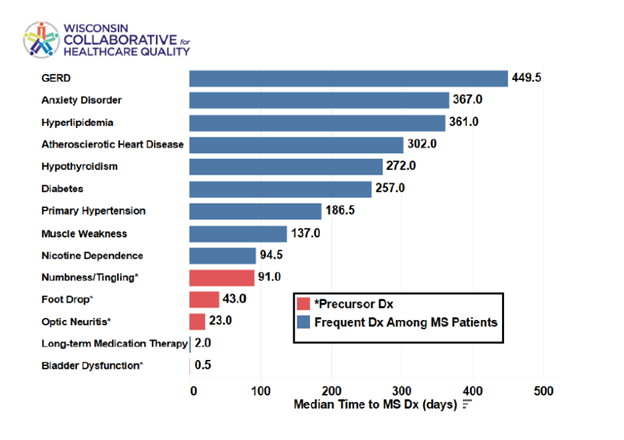
WCHQ data shows that there are opportunities to accelerate time to diagnosis. For example, patients may wait one month for an MS diagnosis after an optic neuritis diagnosis, and up to three months after an unexplained numbness and/or tingling diagnosis—both early precursors of MS. Not only must patients manage the accompanying symptoms of these precursor diagnoses, they also must work with their medical team to understand the underlying cause. WCHQ drives improvement with their member health systems by using data to identify such gaps and find opportunities for improvement and education.
The Unique Challenges in Rural Communities
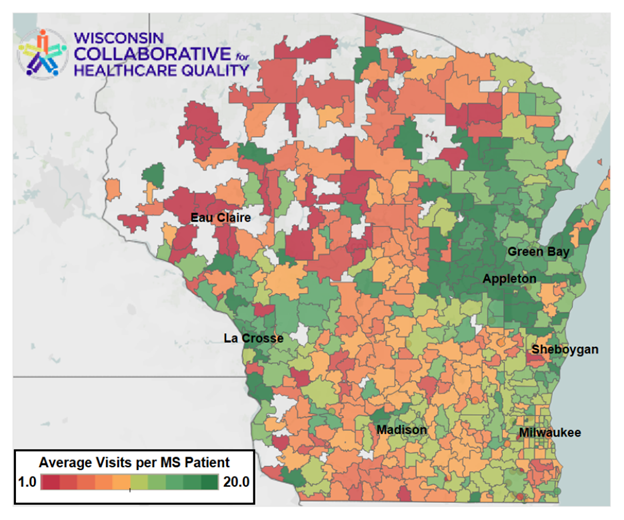
Through WCHQ’s data deep dive on MS, analysis shows that patients in rural and underserved (both rural and urban) areas of the state have fewer health care visits overall, reducing opportunities for assessment of both MS symptoms and initiating disease modifying medications. Additionally, specialists in rural areas cover large geographic areas with appointment availability that is generally limited, causing significant disruptions in care when turnover occurs.
WCHQ’s data analysis has also shown that for patients living in or near major metropolitan areas of Wisconsin, MS specialty care is more accessible. As patients with MS live increasingly farther away from those metropolitan centers, they have fewer and fewer specialty MS care appointments, showing a decrease in access to care.
Impact and Future Outlook: Opportunities for Improvement
Strengthening MS knowledge in primary care, streamlining referral pathways, and supporting medication management can significantly reduce delays in diagnosis and treatment and improve health outcomes. By equipping primary care teams with data‑driven insights and practical tools on MS, health systems can improve early identification of MS, accelerate access to specialty care when needed, and ultimately improve long‑term outcomes for patients across Wisconsin.
"By improving MS knowledge among primary care providers, Wisconsin health systems can reduce the time between symptom onset and diagnosis – thereby beginning treatment earlier in the disease course. There is a great opportunity to identify MS early by symptom identification in primary care and collaboration with neurology,” says Ahmed Obeidat, MD, PhD, neurologist and associate professor of neurology at the Medical College of Wisconsin. "This will result in better disease management, slower disease progression, and lengthen the patient's quality of life before the onset of disability. To improve outcomes for patients with MS in Wisconsin, WCHQ Member health systems are rotating specialists through rural clinics, providing medication management in primary care, and streamlining neurology referrals for appropriate patients."
The National MS Society has a variety of free resources available for rural health care professionals, such as the latest information on how to diagnose, manage, and treat MS as well as professional education CE/CMEs, clinical practice tools, and health care appeals toolkits.
NRHA adapted the above piece from The National Multiple Sclerosis Society, a trusted NRHA partner, for publication within the Association’s Rural Health Voices blog.
| The vision of the National Multiple Sclerosis Society is a world free of MS and their mission is to cure MS while empowering people affected by the disease to live their best lives. Through research, advocacy, education, and health care professional engagement, the Society works to improve access to high-quality care and advance health equity for people impacted by multiple sclerosis across the country. | The Wisconsin Collaborative for Healthcare Quality is a voluntary consortium of organizations dedicated to improving the quality and value of health care. Through data-driven collaboration, performance measurement, and innovation, WCHQ works with partners across the state to advance patient outcomes, strengthen systems, and improve access in underserved communities. |