
What we heard about RHTP from attendees in Kansas City
NRHA invited the nearly 680 rural health professionals who convened for NRHA’s 2026 Rural Health Clinic and Critical Access Hospital Conferences to do something simple while in Kansas City: Tell us about your experience with the Rural Health Transformation Program (RHTP).
RHTP is taking shape differently across the country. NRHA wanted to better understand what rural health leaders are seeing, feeling, and anticipating in their state and their communities. We created a space for conference participants to anonymously contribute by answering the question “What does the future of RHTP look like in your state?” before continuing the conversation with our representatives at NRHA's 38th Rural Health Policy Institute Feb. 9-11 in D.C.
We received dozens of comments, heard many perspectives, and had one ongoing conversation.
We asked. You answered.
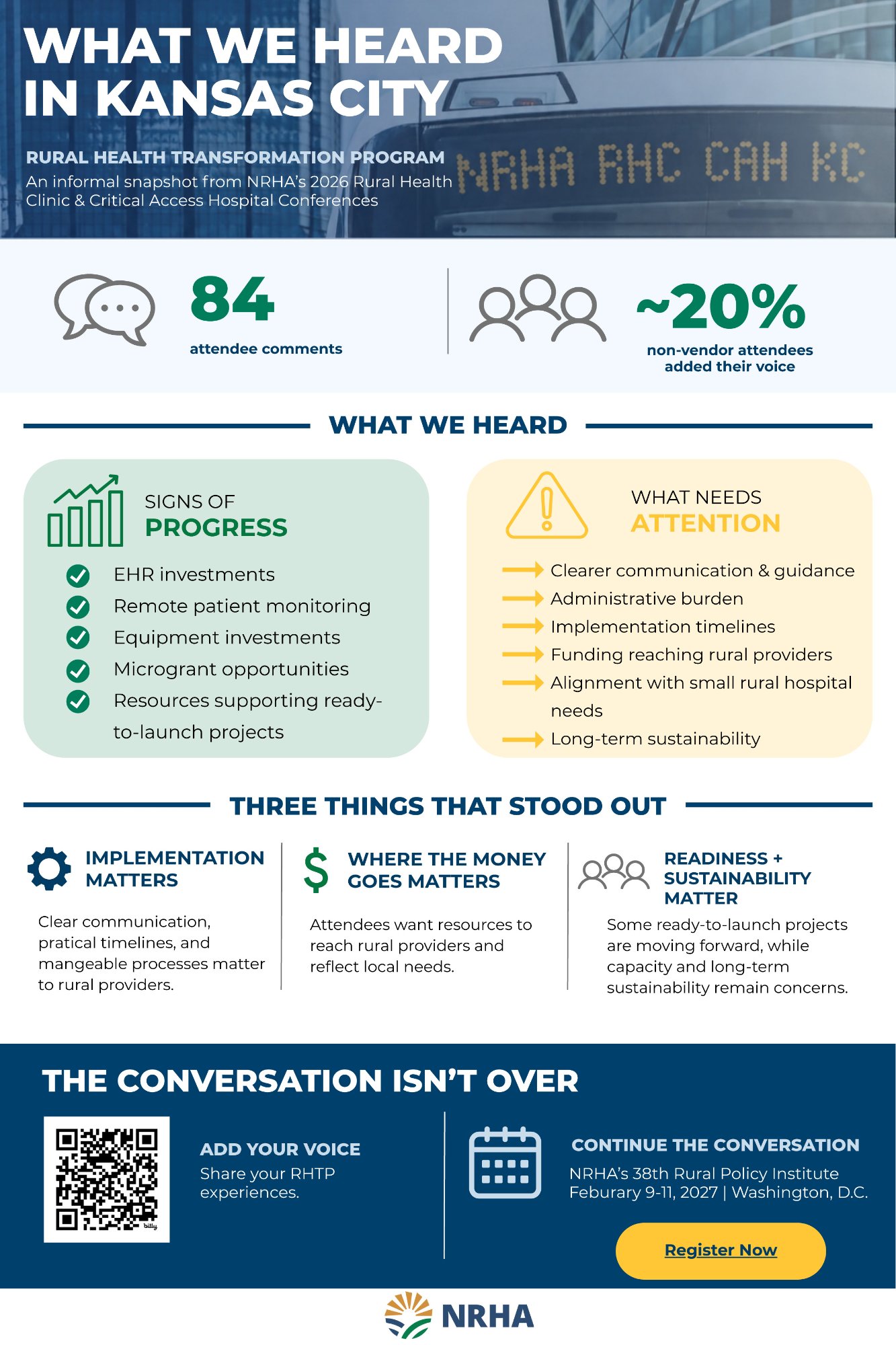
Overall, we collected 84 comments representing approximately 20 percent of non-vendor attendees, with additional attendees stopping to read and engage with the responses. The reactions offered a valuable snapshot of what some rural health leaders are experiencing as RHTP implementation moves forward.
The directions were simple: attendees chose a color card based on their overall sentiment regarding RHTP, with green for excited and optimistic, white for neutral or uncertain, and red for concerned or frustrated. Then they wrote a few sentences about their experiences and posted them on a nearby bulletin board. As the wall filled, the comments showed hope along with frustration, with the overall takeaway supporting the vision while questions linger about implementation.
A shared belief in transformation – with questions about the path forward
The stories that emerged through the cards were nuanced. Attendees expressed support for the promise of investment and transformation in rural health. At the same time, many shared concerns about how that promise is being translated into implementation.
One person wrote, "Great idea. Chaotic rollout. Rural organizations need clear communication, predictable timelines, and adequate planning time. Keep the funding but make the process workable for the people trying to deliver care."
Patterns emerged, some louder than others. The top five common themes include:
The frustration is about execution, not the concept. Hope for the program’s purpose also appeared on red and white cards.
Process complaints dominated, primarily around unclear communication, administrative burdens, rushed timelines, and inconsistency in the application of program requirements.
Several responses cited financing worries, such as “nothing has moved, reimbursement-only model, and delays.” Others were more concerned about diverted money, with “single-vendor contracts, consultants, extra layers, big hospitals calling themselves rural.” Others simply asked, “How much will be clawed back?”
Readiness was a dividing line. Green cards mostly referred to tangible actions, such as investments in EHRs, RPM, equipment, and microgrants. One green card credited the fast implementation to having a “shovel-ready” project. Red cards, meanwhile, say small CAHs lack grant-writing capacity needed for accessing funding.
Sustainability was a quieter but recurring thread, with respondents wondering whether RHTP will be adequate to cover HR-1 changes in Medicaid coverage and spending cuts.
Signs of transformation taking shape
Amongst the concerns about implementation, attendees shared examples of RHTP investments beginning to translate into tangible projects in rural communities. Many people made comments about grants already received and were excited about the impact on their communities.
The positive responses showed what can happen when funding aligns with local priorities. Attendees described projects moving from wish lists to reality, new opportunities to strengthen care delivery, and investments that had previously been out of reach. Several also mentioned the importance of local collaboration and being prepared to act when funding becomes available. While questions about sustainability and long-term impact remain, these experiences reflect genuine optimism about RHTP’s potential to create meaningful change in rural communities.
The responses revealed another important theme: readiness matters. While some organizations described projects moving forward, others questioned whether smaller rural providers have the resources to navigate the process and take advantage of the opportunities.
One attendee from Alaska added: “It's not perfect but encouraging.” That sentiment showed up repeatedly. Even on cards expressing uncertainty or frustration, there remained a belief in what rural health transformation could accomplish if implementation matches the promise.
We’ll continue listening beyond Kansas City
The engagement wall may have come down at the end of the conference, but the conversation didn't end with it. What we heard in Kansas City adds to the conversations NRHA is having with rural health leaders across the country and provides another window into how RHTP implementation is being experienced on the ground. These perspectives can help NRHA better understand where rural providers are seeing opportunity, where challenges remain, and what members need as implementation continues.
Add your voice
Couldn’t make it to Kansas City? Have your experiences changed? NRHA wants to continue hearing from rural providers and leaders as RHTP moves forward.
Continue the conversation at NRHA’s Policy Institute
Your next chance to participate in the conversation about how federal policy translates into rural practice is at NRHA’s 38th Rural Health Policy Institute Feb. 9-11 in Washington, D.C.