
The Bill That Will Shape Who Cares for Rural America
Growing up in Kentucky and West Virginia, I learned early that where you are born shapes what care you can access. There were counties without a single primary care physician, towns where the nearest specialist was an hours-long drive on a two-lane road, and communities where people rationed insulin because they couldn’t afford not to. When I chose medicine, I chose it because of those places.
H.R. 1, (P.L. 119-21), or the One Big Beautiful Bill Act, signed into law on July 4, 2025, changes how future health professionals will finance their training. For rural America, the consequences deserve close attention.
This is an Education Financing Problem
The law eliminates the Grad PLUS loan program for new borrowers beginning July 1, 2026, and imposes new federal borrowing caps: $20,500 per year and $100,000 total for most graduate students; $50,000 per year and $200,000 total for students in designated “professional” programs. The Department of Education’s proposed rule identifies eleven qualifying fields: medicine, law, dentistry, pharmacy, and a handful of others.
Left off that list: nursing, physician assistants, physical and occupational therapy, social work, and public health – disciplines that deliver most rural primary care. Students in those fields face the lower graduate borrowing cap. For many, it won’t be enough to finish their programs without turning to private loans that carry interest rates as high as 18 to 19 percent and none of the federal protections that make income-driven repayment or Public Service Loan Forgiveness (PSLF) possible.
Even for those of us in medicine, the $200,000 lifetime cap falls short. The median total cost of attending an in-state public medical school now exceeds $286,000. One in three medical students will face a gap that federal loans cannot fill. When that gap gets filled with higher-interest private debt, with no income-driven repayment and no PSLF eligibility, the financial calculus changes fundamentally. Federal debt can be managed through service-based forgiveness. Private debt cannot. That distinction matters enormously for a student deciding whether a rural primary care salary is workable.
This is a Rural Workforce Problem
Rural counties are already more likely to be Health Professional Shortage Areas. Rural communities represent about 20 percent of the U.S. population but only about 10 percent of its physicians. HRSA projects a shortage of roughly 70,000 primary care physicians by 2038, with rural demand met at lower rates than urban. The nursing shortage compounds this: nearly 59 percent of nurses surveyed last year said they are now less likely to pursue a graduate degree under the new borrowing limits.
The research is unambiguous: students from rural backgrounds are 4 to 5 times more likely to practice rurally. Programs like mine in Morehead, Kentucky exist because place-based exposure changes the trajectory of a career. I think about the students I’ve trained alongside: first-generation college graduates from rural Eastern Kentucky, West Virginia, and Ohio, students who came into medicine because they watched their own counties go without. These are the students most sensitive to debt burden. They are also the students most likely to go back to rural practice.
This is a Training Site Problem
The HR-1 changes to student loan provisions don't exist in isolation. The law is projected by CBO to reduce federal Medicaid spending by roughly $900 billion over ten years. Rural hospitals are disproportionately Medicaid-dependent; more than 190 have closed since 2005, and over 400 more are at immediate financial risk. When those facilities reduce services or close, students don’t just lose clinical training sites, they lose exposure to rural practice itself, which is vital toward professional identity formation as a rural doctor. The pipeline doesn’t break at one point; it frays along its entire length.
The law does include a $50 billion Rural Health Transformation Program to partially offset Medicaid losses. But the Kaiser Family Foundation and Manatt/NRHA caution that this is unlikely to fully compensate for the cuts, and outcomes will vary widely based on how states choose to deploy the funds, with extremely limited time to do so under a 12-month implementation and reporting timeline. NRHA has urged that RHTP dollars be explicitly tied to workforce and training outcomes.
What Now?
Rulemaking for the July 2026 implementation is still underway, and the time between now and then is critical. More than 140 members of Congress have already urged the Department of Education to classify nursing as a professional degree. The same logic should extend to physician assistants, physical therapists, and other licensed clinicians who function as primary care professionals in shortage areas.
There is bipartisan recognition that the professional degree definition is too narrow. Rep. Mike Lawler (R-NY) has introduced the Professional Student Degree Act to expand which programs qualify for the higher borrowing caps; Rep. Ritchie Torres (D-NY) has introduced H.R. 6677, the Professional Degree Access Restoration Act, taking a broader approach. Either path forward would help. Congress should move towards advancing one of them. Congress should also advance H.R. 6468, the Rural Residency Planning and Development Act, which would authorize federal grants to help hospitals and clinics build new rural residency programs from the ground up. Only 2 percent of residency training currently occurs in rural areas. Fixing who can borrow is necessary but not sufficient. We also must fix where doctors train.
Every conversation with a congressional office, every comment to the Department of Education, and every RHTP dollar tied to rural workforce outcomes matters.
I came into medicine with a straightforward conviction: the communities I grew up in deserve the same quality of care I encountered when I left them for college in a major metro area. That remains true. But policy shapes who can afford to act on that conviction. If we want a rural workforce a decade from now, we must build a system that students can enter — and stay in — today.
NRHA accepts selected submissions from association members on issues and topics they are passionate about for publication within the Association’s Rural Health Voices blog.
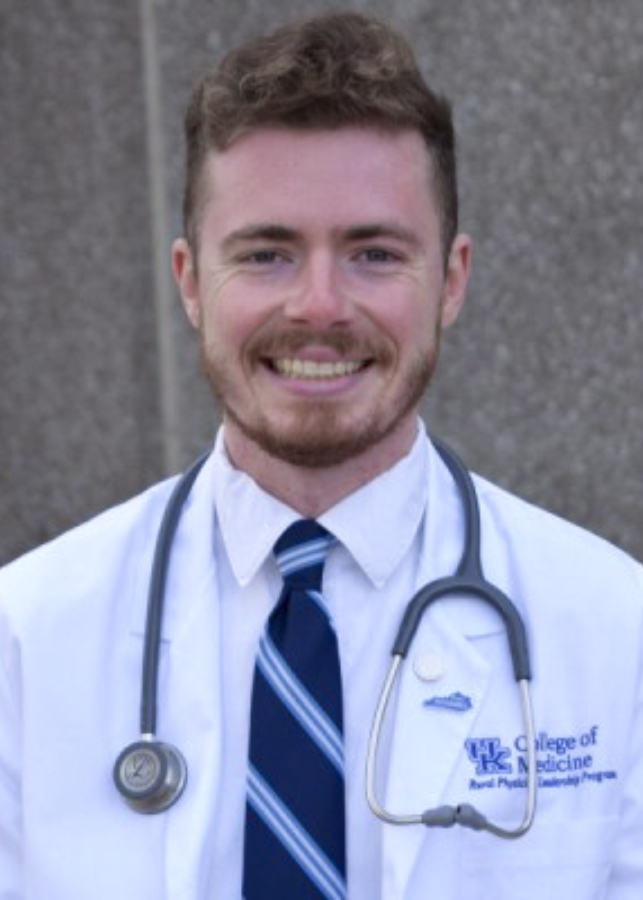 | Bradley A. Firchow is a fourth-year University of Kentucky College of Medicine's Rural Physician Leadership Program student and co-founder of the CATS Clinic in Morehead, Ky. He has served as NRHA Student Constituency Group Chair, on NRHA's Rural Health Congress, and received NRHA's 2025 Quinn Student Award. |